Resmetirom effects in MASH were similar across common risk genotypes
A pre-specified analysis of 738 MAESTRO-NASH patients found no significant effect of common MASH risk genotypes on resmetirom response, though the study was not powered for small effects.
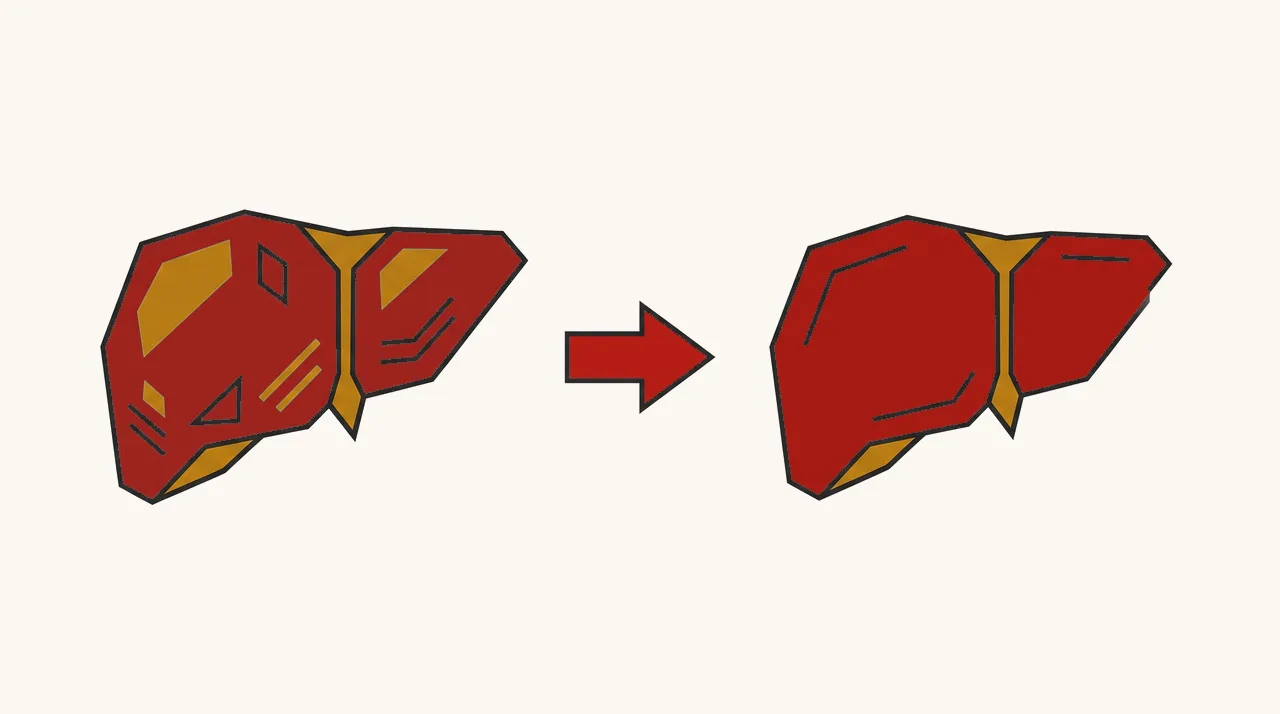
At a glance
- In MAESTRO-NASH, resmetirom's effects on MASH resolution, fibrosis improvement and MRI-PDFF at Week 52 were not significantly changed by common risk genotypes.
- Among trial participants, those with high-risk PNPLA3 or HSD17B13 genotypes had fewer metabolic risk factors, including type 2 diabetes and hypertension.
- The study was not powered to detect small genotype effects, so modest differences cannot be excluded.
The study
Resmetirom is a thyroid hormone receptor beta agonist. It has recently been approved for the treatment of metabolic dysfunction-associated steatohepatitis (MASH), and it improves MASH and liver fibrosis in patients with non-cirrhotic MASH. Several gene variants are linked to the risk of MASLD, MASH, fibrosis, cirrhosis and hepatocellular carcinoma. These include PNPLA3, HSD17B13, TM6SF2, MTARC1, MBOAT7 and SERPINA1.
This paper asks a practical question: does a patient's genotype change how well resmetirom works? The analysis was pre-specified within the phase III MAESTRO-NASH trial (NCT03900429). It included 738 patients who consented to DNA collection, were genotyped for all the genes, and had liver biopsies at baseline and at Week 52. The authors compared resmetirom with placebo on MASH resolution, fibrosis improvement on biopsy, MRI-proton density fat fraction (MRI-PDFF) and other biomarkers. They looked at each genotype alone and as a composite genetic risk score.
What they found
At baseline, patients with high-risk PNPLA3 or HSD17B13 genotypes had a lower frequency of metabolic risk factors than those with low-risk genotypes. This included type 2 diabetes and hypertension.
At Week 52, resmetirom showed similar positive effects on MASH resolution, fibrosis improvement, MRI-PDFF response and biomarkers in patients with high-risk genotypes of PNPLA3, HSD17B13, TM6SF2, MTARC1 and MBOAT7. This held for single genotypes and for the composite risk score. The effects were independent of sex, Hispanic ethnicity and metabolic risk factors.
The authors conclude that common MASH risk genotypes did not significantly affect resmetirom's effects. They suggest the drug's mechanism of action may help offset the harmful effects of these variants. This is an interpretation, not something the analysis tested directly.
How much weight to give it
The data come from a placebo-controlled phase III trial, and the analysis was pre-specified. Both points add credibility. Still, this is a genetic subgroup analysis. It includes only patients who consented to DNA collection and were genotyped. The authors state that the sample size was limited and the study was not powered to detect small effects of risk genotypes. "Not significantly impacted" is therefore not proof of no difference. Smaller genotype effects could be missed.
The abstract's results text does not name SERPINA1 among the genotypes with similar effects. The abstract does not report effect sizes, confidence intervals, genotype frequencies or funding. The endpoints are liver biopsy, imaging and biomarker measures. They are not long-term outcomes such as cirrhosis, liver cancer or death.
The baseline finding on metabolic risk factors describes people enrolled in this trial. It should not be read as a rule for the wider population.
For your clinic
In this trial, resmetirom's benefits were similar regardless of common MASH risk genotypes, within the limits of the sample size. The abstract does not address genetic testing or how to choose patients for treatment, so this paper alone does not change how patients are selected.
This is a general point about the evidence, not advice for any individual patient. Read the full paper before changing practice. Check the effect sizes, the genotype subgroup numbers and the safety data. Also check current guidelines and the local regulatory status. The abstract does not say how well these findings apply to Indian patients.
Source
Effects of MASH risk genotypes on resmetirom efficacy in patients with MASH and fibrosis.
Chalasani NP, Taub R, Mogg R et al.. Journal of hepatology. 5 October 2026
For registered medical practitioners. This report summarises published research and is not advice for individual patients. Read the full paper and current guidelines before changing practice. Found an error? Write to editor@diabesityrounds.com; see our corrections and editorial policy.
Go deeper
- CASPIAN Certificate in Obesity MedicineRegister interest for the next batch
- Beta Cell AcademyCME for doctors in Hyderabad
Today's Rounds, in your inbox at 8am
The day's reports each morning, and Weekend Rounds on Saturday. Free, no advertising.