CGM lowers HbA1c in adults with type 2 diabetes not using insulin in primary care
In a 26-week randomised trial in US primary care, CGM led to a greater fall in HbA1c than routine care in adults with type 2 diabetes not using insulin.
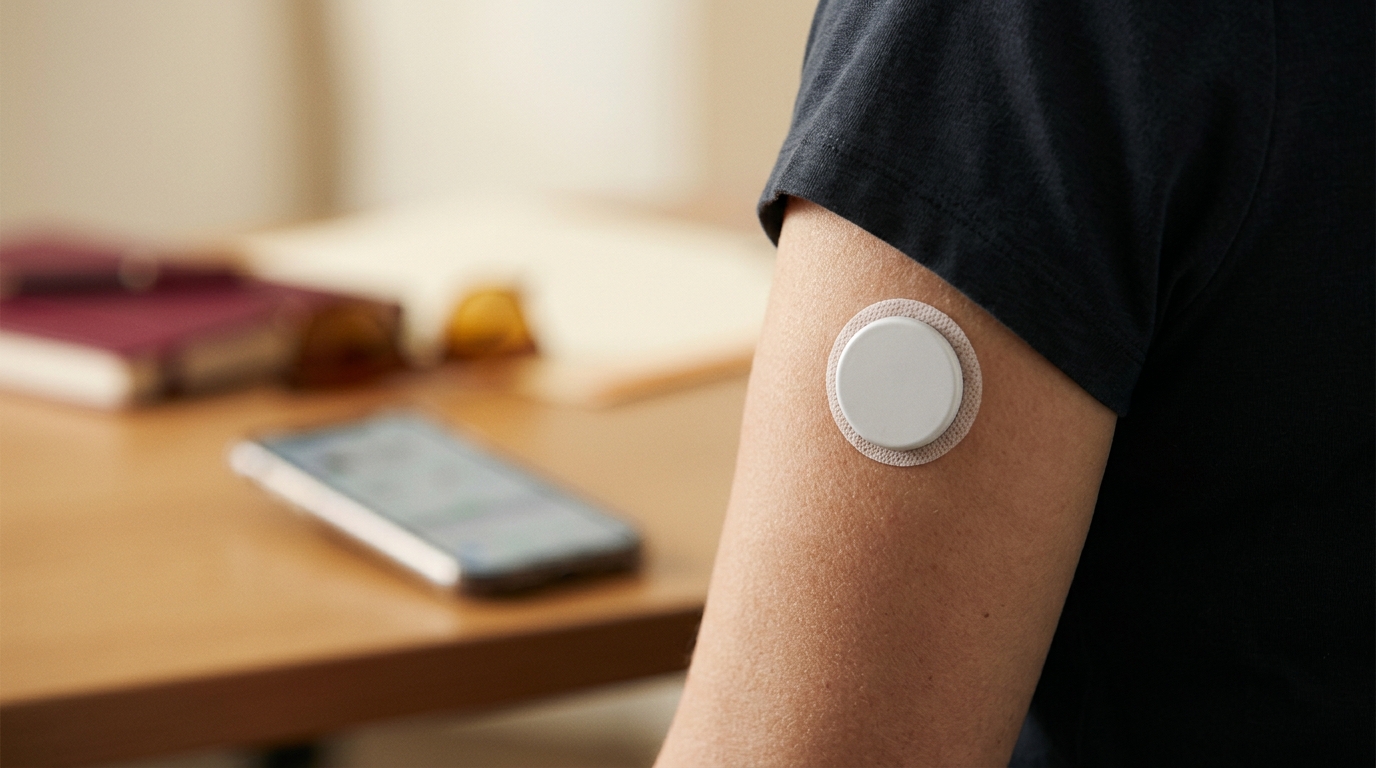
At a glance
- HbA1c fell from 8.8% to 7.2% with CGM and from 8.7% to 8.0% with routine care, an adjusted mean difference of -0.9 percentage points.
- Time in range (70 to 180 mg per deciliter) was 21 percentage points higher with CGM. Time below 54 mg per deciliter was noninferior with CGM. Time below 70 mg per deciliter was noninferior and also superior (P=0.004).
- The trial ran for 26 weeks and was funded by Dexcom. It measured a surrogate outcome, so the effect on long-term complications is not known.
The study
This is a randomised trial called CONNECT (ClinicalTrials.gov number NCT06601166), published in the New England Journal of Medicine. It was run at 22 primary care practices in the United States. Adults with type 2 diabetes who were not using insulin were assigned to continuous glucose monitoring (CGM) or to routine care. A total of 145 participants were assigned to CGM and 138 to routine care. Participants were aged 21 to 84 years. The primary outcome was HbA1c at 26 weeks. Key CGM-measured secondary outcomes were tested in a fixed hierarchy to control the type I error rate. The trial was funded by Dexcom.
What they found
In the CGM group, mean HbA1c fell from 8.8% (SD 1.3) at baseline to 7.2% (SD 1.1) at 26 weeks. In the routine-care group, it fell from 8.7% (SD 1.2) to 8.0% (SD 1.4). The adjusted mean difference was -0.9 percentage points (95% CI -1.1 to -0.6; P<0.001), in favour of CGM.
Time in the glucose range of 70 to 180 mg per deciliter was 21 percentage points higher with CGM than with routine care (95% CI 16 to 26; P<0.001).
The authors also looked at low glucose. For time below 54 mg per deciliter, the between-group difference was -0.17 percentage points (95% CI -0.27 to -0.11). CGM was noninferior on this measure (P<0.001 for noninferiority). The abstract reports no superiority test for it. For time below 70 mg per deciliter, the difference was -0.20 percentage points (95% CI -0.43 to -0.09). CGM was noninferior (P<0.001) and also superior (P=0.004). No severe hypoglycaemia events were reported.
The authors concluded that CGM led to a greater reduction in HbA1c and a lower risk of hyperglycaemia than routine care.
How much weight to give it
Randomisation allows a causal reading of the HbA1c difference over 26 weeks. The confidence interval for the HbA1c difference lies wholly below zero. The secondary outcomes were tested in a hierarchy, which limits the risk of false positives.
Several limits matter. HbA1c and time in range are surrogate outcomes. The abstract does not report effects on heart, kidney or other long-term outcomes. Follow-up was 26 weeks, so it is not known if the benefit lasts after that. The abstract does not report whether participants or staff were blinded, which medicines participants were taking, or what changed in care during the trial. It also does not report costs. The trial was funded by Dexcom, so the full paper should be checked for the role of the sponsor in design and analysis. Because there were no severe hypoglycaemia events, this trial cannot say much about rare harms.
For your clinic
This trial adds evidence that CGM may help adults with type 2 diabetes who are not using insulin and who are managed in primary care. The mean HbA1c at baseline was 8.8% in the CGM group and 8.7% in the routine-care group, so the result may not apply to people whose HbA1c is already close to target. The trial studied adults in US primary care and followed them for 26 weeks, so apply the findings with care to other groups and settings. Read the full paper before changing practice. Look at who was enrolled, what support or education the CGM group received, and how routine care was delivered in the control group. Think also about cost and whether CGM can be offered along with follow-up that helps patients act on the data.
Source
Continuous Glucose Monitoring in Non-Insulin-Treated Type 2 Diabetes.
Oser TK, Martens T, Ruedy KJ et al.. The New England journal of medicine. 14 October 2026
For registered medical practitioners. This report summarises published research and is not advice for individual patients. Read the full paper and current guidelines before changing practice. Found an error? Write to editor@diabesityrounds.com; see our corrections and editorial policy.
More on insulin, cgm and pumps
- twiist automated insulin delivery in type 2 diabetes: 13-week single-arm trialOther study · 10 October 2026
Go deeper
- CASPIAN Certificate in Obesity MedicineRegister interest for the next batch
- Beta Cell AcademyCME for doctors in Hyderabad